
AI image how-to · modifier
How to Create a Material and Texture Board from an Interior Photo
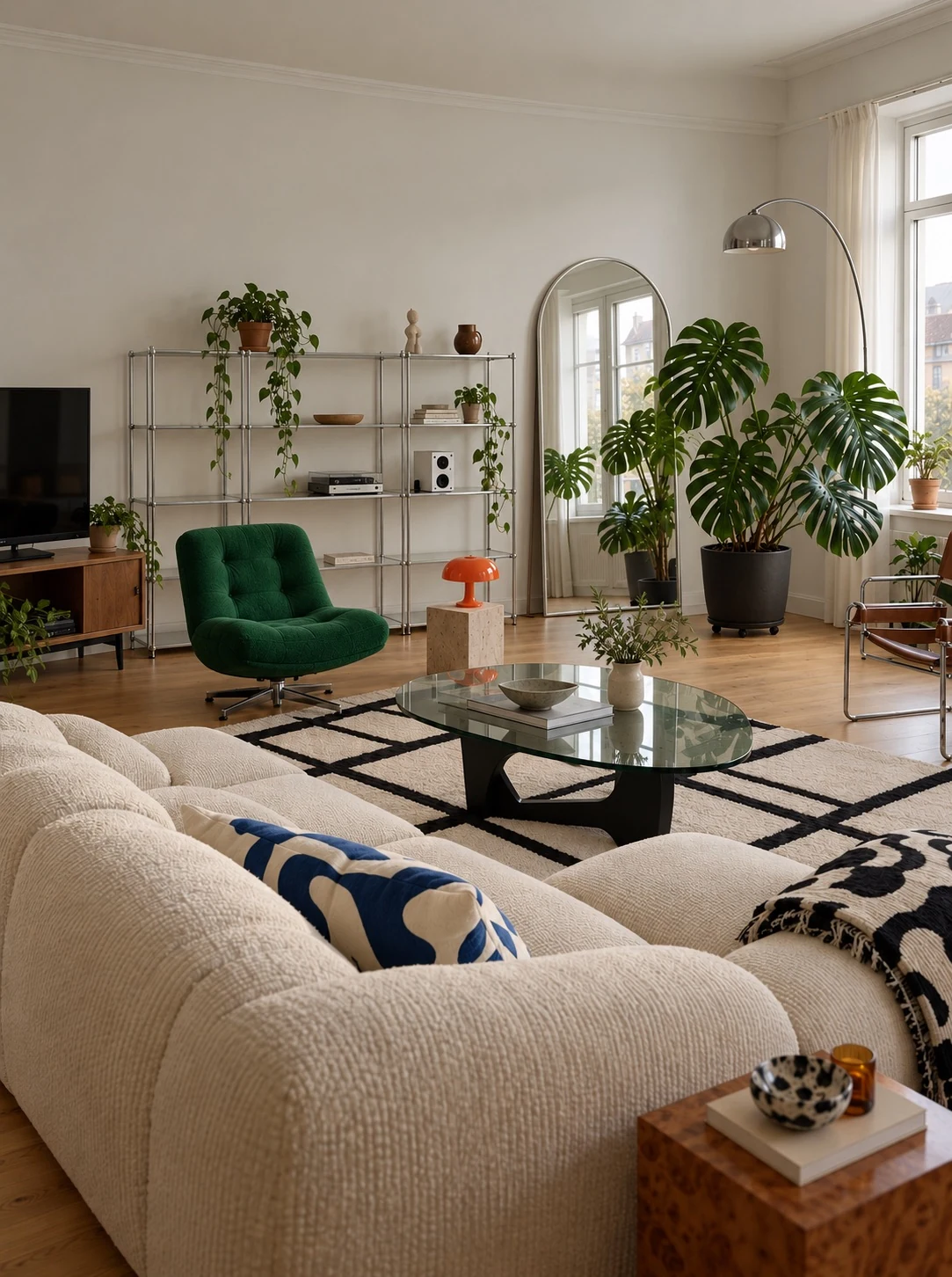
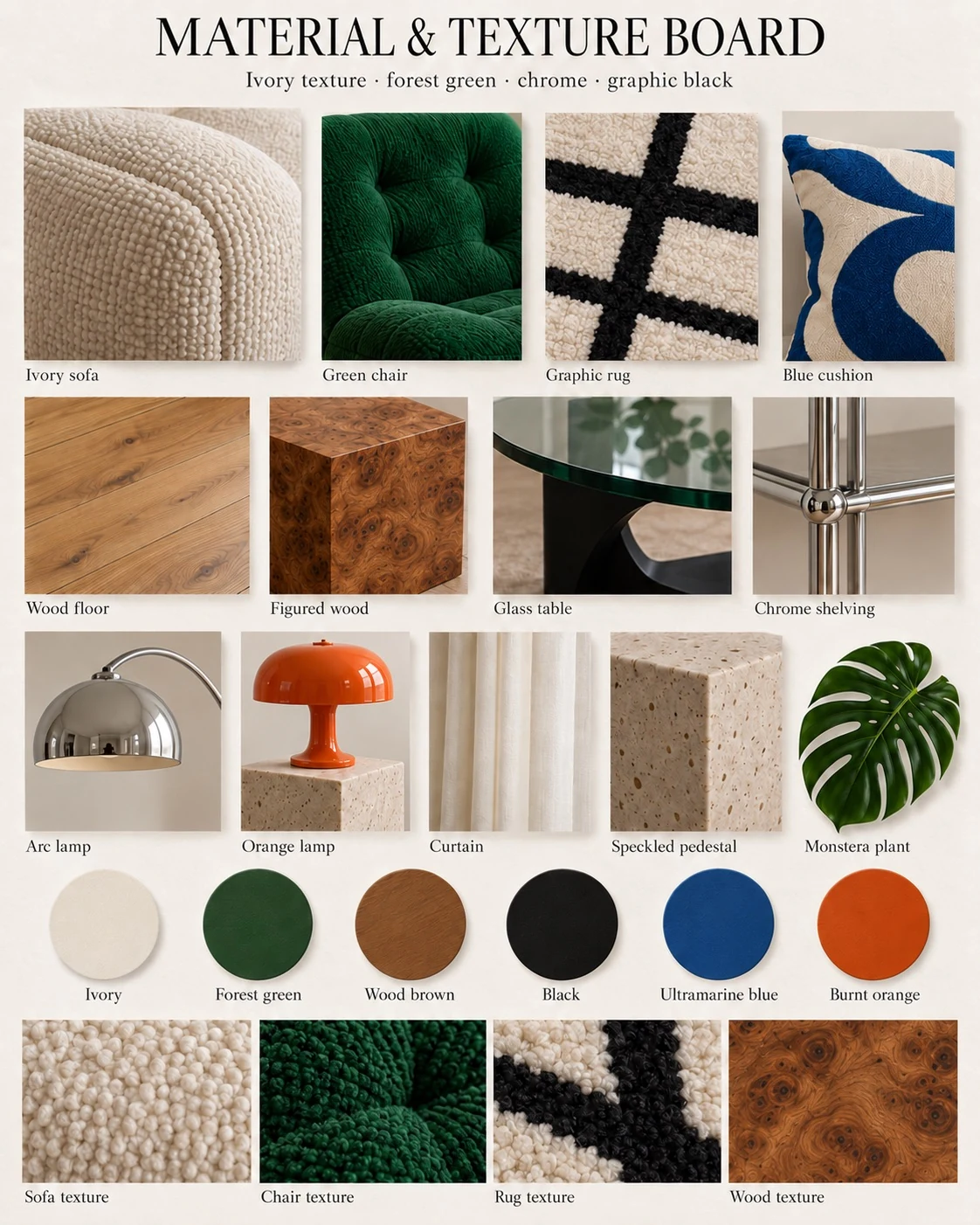
Turn an interior photo into a curated material and texture board. Upload a room image and use this AI prompt to bring its defining details together in one visual collage: a color palette, close-up samples of fabrics and finishes, and distinctive patterns, artwork, or objects visible in the space. The result is useful for interior designers preparing client presentations, exploring a room’s visual identity, or communicating a design direction. It can also help homeowners understand which colors and materials give an interior its character. The prompt works with different interior styles and asks the AI to base the board on the photo you provide.
Before
After
Use in GPT-Image-2.5
full prompt
Create a polished interior design material and texture board based on the attached interior photograph. Treat the photograph as the sole source of truth for the room’s colours, materials, patterns and objects. Analyse what is actually visible, then turn its most distinctive details into a curated editorial collage.
Use a warm off-white background and a portrait layout. At the top, place an elegant serif title, “MATERIAL & TEXTURE BOARD”, with a short line of keywords describing this particular interior. Below it, arrange approximately 9–12 carefully spaced samples in a tidy but varied grid. Include close-up swatches of the room’s key surfaces and textiles, cropped details of distinctive patterns or artwork, and a few isolated objects or material samples where they are visible in the photograph. Show realistic depth, tactile texture and soft natural shadows, as though physical samples were laid out and photographed for a design magazine.
Add a small colour palette of 5–7 painted circles sampled from the photograph, including its main neutrals and accent colours. Along the bottom, add a narrow strip of enlarged texture close-ups. Give each main sample a short, discreet label naming the actual material or object; use brief, legible text and avoid long descriptions.
Keep the palette, proportions, patterns and material finishes faithful to the source photograph. If a material cannot be identified confidently, describe its visible appearance rather than guessing its composition. Do not introduce colours, furniture, finishes or decorative motifs that are absent from the room. This should feel like a beautiful visual breakdown of this specific interior, not a generic moodboard or a recreation of the room. High-end interior editorial art direction, precise alignment, generous spacing, realistic material detail, portrait 4:5 aspect ratio.
Text to image1 input image